Poor material flow affects everything both up and downstream in the process, ruining efficiency and wasting money. Flow promotion is about matching the failure mode (the arch, the rathole, the buildup) to the material causing it and the equipment it interacts with. GQI covers the full toolbox, from Artech ultrasonics to delumpers, so the recommendation follows the problem directly.
Every stalled discharge has a signature. An arch bridging the outlet. A rathole draining the core and leaving the walls full. Product caking on the wall, lumps jamming the spout, fine powder flushing through uncontrolled, or a heel that never empties. Naming the failure mode is the first step; the material and the vessel geometry decide the fix.
Bridging, solved ultrasonically: the Artech Flowsonic in action.
Vibration, mechanical action, and aeration each earn their place. The right one depends on the material, the vessel, and what has already been tried. GQI works across all three families.
High-frequency energy applied at the wall keeps powder moving without hammering the vessel: GQI's in-house specialty, with the Artech Flowsonic.
Vibration · high frequency, low amplitudeExternal vibrators shake the cone or bin wall to collapse arches and keep product sliding.
Vibration · medium frequency, medium amplitudeDiscrete, heavy blows to knock down buildup and stubborn arches on rugged vessels.
Vibration · low frequency, high amplitudeBreak agglomerates and compacted lumps in-line so downstream equipment sees consistent product: GQI's other in-house specialty.
MechanicalInternally-fixed mechanical agitators stir the vessel contents to prevent bridging and consolidation at the outlet.
MechanicalA rotating element at the vessel base sweeps product to the outlet for controlled, continuous discharge.
MechanicalA vibrated, flexible-mounted cone bottom that activates the whole outlet zone of a bin or silo.
MechanicalAeration pads fluidize the boundary layer at the wall so cohesive powder releases and flows.
Aeration / fluidizationAerated cone bottoms that keep the entire discharge zone fluidized and moving.
Aeration / fluidizationOur in-house specialties are ultrasonic and lump-breaking, and we source the rest for you, so the recommendation stays honest.
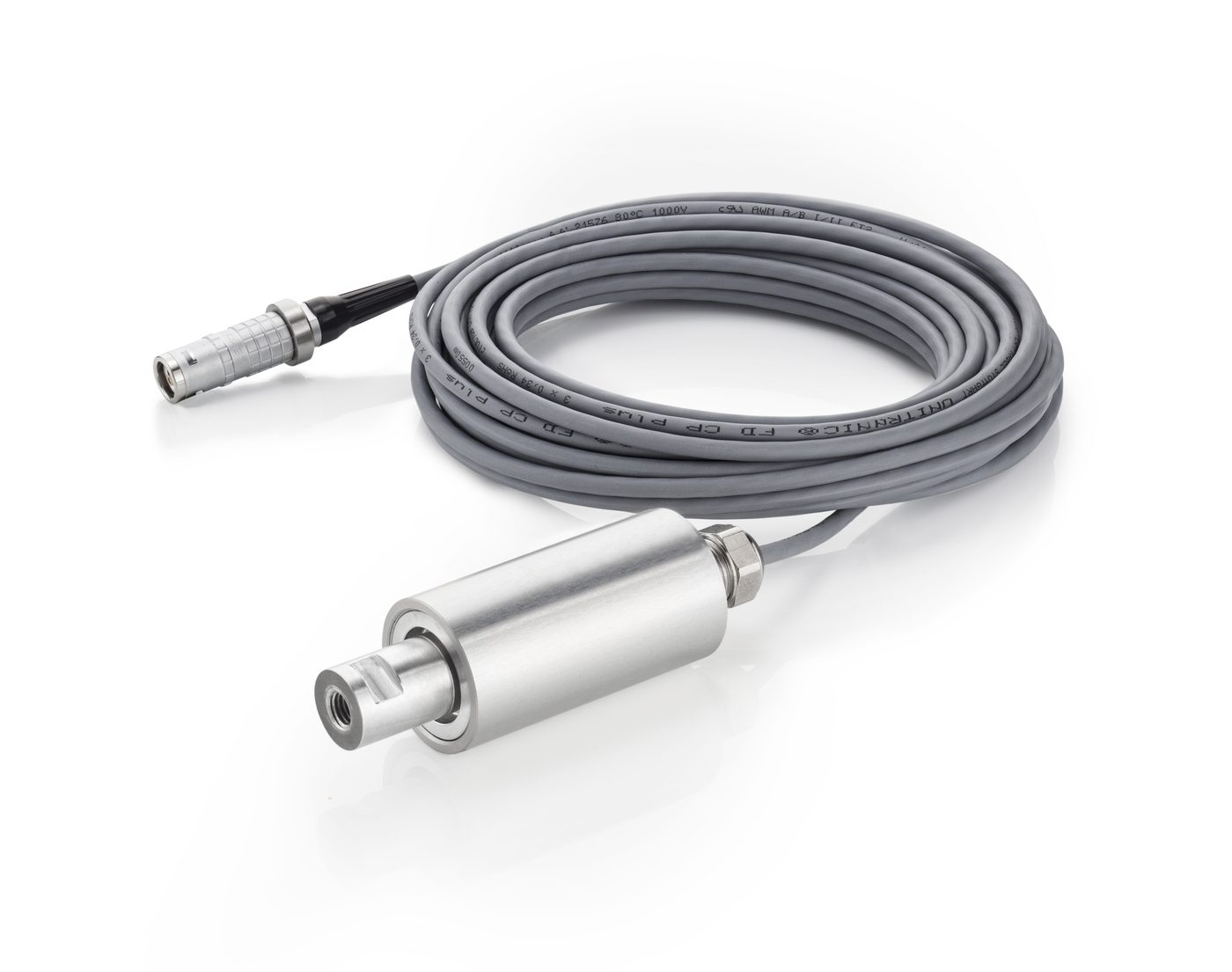
Start a Flow-Promotion Request →Instead of waiting for an arch to form and then breaking it, the Flowsonic applies high-frequency, low-amplitude ultrasonic vibration at the vessel wall, keeping the powder in motion so flow problems like bridging are avoided before they start. A compact transducer clamps to the cone, feeder, or dosing tube; no hammering, no structural fatigue on the vessel.
Field applications include titanium dioxide, cocoa powder, calcium carbonate, zeolite, vitamin mixes, and chemical powders, from weighing hoppers to twin-screw feeders and dosing pipes.
The material drives everything, so that's where the questions start. Four things decide the recommendation.
Bulk density, moisture, particle size distribution, temperature, and how it behaves: free-flowing, cohesive, hygroscopic, caking, abrasive, heat-sensitive, fibrous, electrostatic, or hazardous.
Hopper, bin, silo, IBC/tote, or day bin, and its geometry: conical, pyramidal, wedge/plane-flow, or flat, with wall material and liner.
Outlet size, wall angle, capacity, headroom, and the flow pattern, mass flow (first-in-first-out) or funnel flow, plus what's above and below the vessel.
GQI knows flow promotion, you know your process - A vibrator compacted the powder, an air cannon that never reached the rathole: each failed attempt points directly at what will actually work.
The configurator walks exactly these questions (problem, technology interest, material, vessel) and lands on GQI's desk as a complete flow-promotion request.
Describe Your Flow Problem →Artech Ultrasonic Systems AG builds the ultrasonic technology behind the Flowsonic discharging system, and behind the ultrasonic screen-cleaning systems on our screening pages. GQI is the North American reseller and application partner: we evaluate whether ultrasonics fits your problem, spec the system, and support it after installation.

Free reference tools from our Resources & Tools library: no configuration required.