Most screening problems are motion problems. Conventional vibratory screeners drive product across the deck with intense, high-frequency vibration: effective for coarse, forgiving materials, but punishing for the fine, friable, and difficult-to-screen products modern processors depend on. Particles fracture, superfines smear into the wrong fraction, screens wear out, and yield walks out the door.
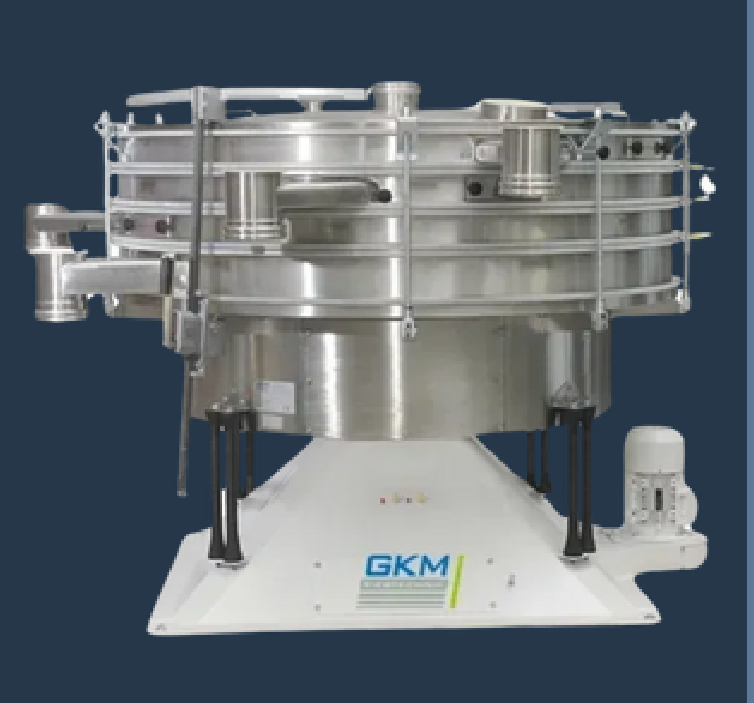
GKM’s tumbler screening machines take a different approach: a gentle, three-dimensional elliptical motion that works the way hand-sieving does: moving product across the screen precisely and controllably, without beating up the material or the machine. Motion is tuned on three axes to the application, so dwell time on the screen becomes an engineering variable instead of an accident.
The Comparison, Side by Side
| Traditional Vibratory | GKM Tumbler Screening | |
|---|---|---|
| Screening motion | Intense, high-frequency vibration | Gentle, three-dimensional elliptical movement |
| Material treatment | Aggressive: degrades fine and friable products | Non-aggressive: preserves particle integrity, purity, and quality |
| Cut quality & yield | Limited control over how long product works the screen | Adjustable dwell time via three-axis motion control: sharper cuts, higher yield, less reprocessing |
| Capacity | Screen surface under-utilized at high feed rates | Better surface utilization: up to 6 decks and 7 fractions in a single machine |
| Wear & uptime | High stress on screens, components, and structure | Gentle motion extends screen and machine life: designed for 24/7 operation with minimal maintenance |
| Plant environment | Higher noise and power draw; vibration transmitted to the building | Quiet operation at ~75 dB(A), lower power consumption, fully balanced for vibration-free installation |
Where It Earns Its Keep
Tumbler screening pays for itself fastest where products are fine, friable, abrasive, or high-value, and where a sharper cut goes straight to yield.
One Machine. Three Dimensions. Up to Six Decks.
GKM’s KTS tumbler screening machine is built to separate and dedust dry, powdered, and granular products at high feed rates, and it earns its keep on exactly the materials that defeat vibratory screeners: fine, lightweight, and difficult to screen.
Tight, repeatable cuts for demanding quality standards.
Better surface utilization: more capacity per footprint.
Motion engineered to the application for maximum yield.
Gentle motion extends screen and machine life.
Lower power draw; ~75 dB(A) in operation.
Contained by design: cleaner, safer plants.
Process Capabilities
Model Range & Dimensions
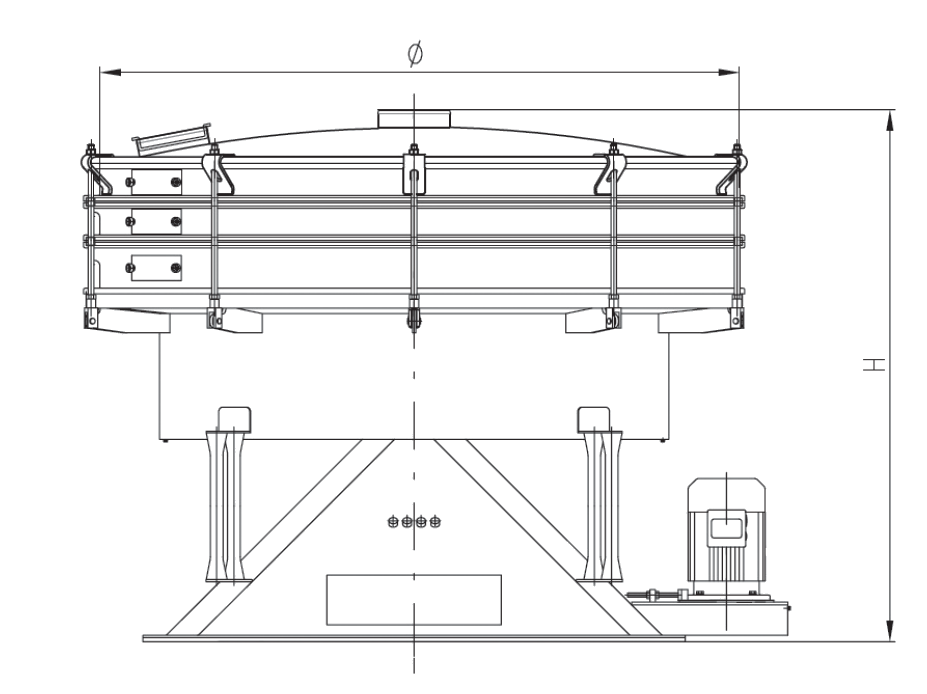
| Model KTS | 600 | 1000 | 1200 | 1600 | 2000 | 2400 | 2600 |
|---|---|---|---|---|---|---|---|
| Screening area (m²) | 0.3 | 0.725 | 1.1 | 1.8 | 2.6 | 4.5 | 5.3 |
| Diameter Ø (mm) | 630 | 900 | 1100 | 1601 | 1901 | 2471 | 2672 |
| Motor power (kW) | 0.25 | 1.50 | 2.20 | 4.00 | 4.00 | 5.50 | 5.50 |
| Weight (kg) | 215–300 | 500–950 | 900–1100 | 1280–1580 | 1300–1700 | 2400–2800 | 2500–3000 |
| Height, 1–6 decks (mm) | 817–1383 | 944–1514 | 1264–1834 | 1283–1853 | 1396–1966 | 1572–2142 | 1582–2152 |
Prefer this comparison on paper? Download the print edition to share with your team.
Download Technical Brief →